




Oyo State Governor, ‘Seyi Makinde, has explained that his administration has put in place major policies, actions and economic enablers that will make the Pacesetter State the hub of tourism in South-West Nigeria and a major tourism destination in the country.
The governor stated this on Wednesday, at the International Tourism Summit Oyo State 2026, noting that with key infrastructure development projects connecting towns and communities in the state, improved security as well as ongoing efforts to revitalise major tourist attractions, the number of tourism activities in Oyo State will increase in the next few years.
Speaking at the summit themed: “From Groundwork to Governance: Building Tourism That Endures,” held at the International Conference Centre, University of Ibadan, the governor said that another major factor that will make the state a tourism hub is in the area of continuity of policies and ideas, as according to him, policies underpinning tourism development have been institutionalised, with structures and systems well built and ideas aligned to sustain sector.
According to the governor, his administration has been showcasing tourism assets and building structures to institutionalise them beyond his term in office, with an approach that is deliberate and strategic, and goes beyond initiating projects, but is rather focused on building structures capable of sustaining long-term growth in the tourism sector.
He added that his administration has created a system where investment is not only possible but structured, protected and enduring for investors in the state.
He noted that investors should nurse no fear about leadership changes, as the teeming people of Oyo State will support members of his team in the next election cycle so that they can sustain policies and ideas that have worked out well in the interest of the state.
He said: “Some of you here were part of the tour of the Oke Ogun Zone, I hope you can now see why Oyo State is set to become the tourism capital of Southwest Nigeria in the coming years.
“I usually boast to people that from the train station in Moniya, you can drive at least 180 kilometres on state roads, with no single pothole. At least you can drive Moniya to Iseyin; it’s 65 kilometres. You can drive from Iseyin to Ogbomoso; it is 76 kilometres. And you can drive from Iseyin to Oyo. It’s about 42 kilometers and you won’t see one pothole on those roads.
“But now I want to speak about something more fundamental. Let me start by acknowledging our reality. When investors consider opportunities within our environment, there’s always an underlying question. It is not always asked openly. They may not come to you, but behind us, they are asking those questions.
“And the question is, what happens after this administration? Will policies continue? Will agreements be honoured? Will priorities remain consistent? And these are valid concerns, because investment, by its nature, is long-term.
“When you have long-term investments, you require more than vision. You require more than sweet talk. So, long-term investment requires continuity. And given the volatility of our political climate, we have had instances where one administration does its best to build systems, and the next comes in and scuttles it.
“Look at the 110 kilometres Circular Road we are building, it was conceived in early 2000 and nothing happened to it until two decades later. That’s not good. So, any private sector player who was hoping on working with that corridor would have been disappointed, and then investment would have been lost.
“But when we assumed office, we understood that progress driven solely by leadership is not enough, because leadership changes. I have told the people that I will recommend for the people of Oyo State, but the decision will rest with the people of the state. If we make a mistake, it’s a one-day event, but the impact will last four years. So, we must get it right.
“Leadership changes, but systems endure. So, our focus has been deliberate. For this tourism sector, we’re not just initiating projects. We’re building structures that can sustain them. Structures that define how decisions are made. We have aligned institutions around shared goals and ensure that progress does not depend on individuals. This is institutionalisation.
“But let me be clear about what this means in practice. It means we are creating and running coordinated systems. You have already seen this through the establishment of the 25-year tourism master plan committee and the structure development frameworks, such as what you have seen for Eleyele Lake.
“They are not temporary measures. They are building blocks of a system. So, indeed, we’re not speaking about continuity in theory. We are demonstrating it in practice.
“Last year, this summit opened the way for clarity under the Focus 5 investment site. And this year, like you already know, I am happy to again announce that a 15-year concession agreement has been signed with System Specs Limited for Bower’s Tower.
“Now to talk to investors. What does all of this mean for you? It means that when you engage with Oyo State, you are engaging with a system. A system where decisions are guided by frameworks, engagement is coordinated across government, and projects are anchored in long-term plans. It means that your investments are not dependent on personalities, but supported by structures. And what does that also mean? It means your risks are greatly reduced.
“So, as we approach the latter phase of this administration, our focus is clear. It is not just to complete projects but to ensure that what has been started can continue.”
Speaking on continuity, the governor maintained that as he had said on many occasions, he would recommend an individual to the people of the state, who would then decide who to vote for as the next governor, stating, however, that such recommendation will be influenced by loyalty to Oyo State and capacity to move the state forward rather than political party colouration.
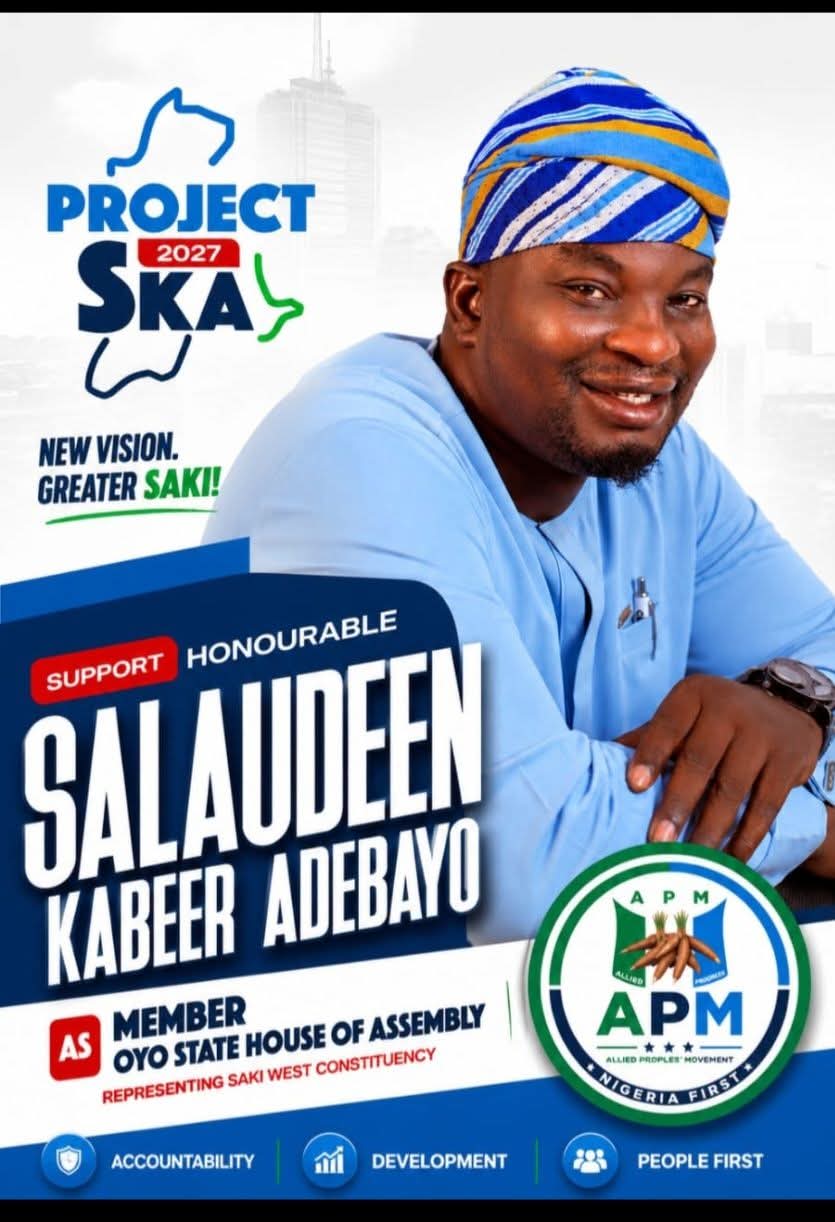
He reiterated that his administration has been able to achieve success because it is blind to party affiliations and mainly focused on the development of the state, saying: “For us, if you’re from Oyo State, and you’re loyal to Oyo State, and you have faith in your state, and you have the capacity, we will tap you to support the development of Oyo State.”
He explained that what his government is trying to achieve with regards to continuity is to push for an Oyo State, “where the future administrations will not need to begin again. They will be able to build on what exists because the foundation has been properly laid. And this is what we mean when we say from groundwork to governance. We have moved beyond identifying opportunities. We are now building systems that will sustain them.”
He rallied the people of the state, especially the traditional rulers to continue to back the administration and to key into its vision and focus for the continued prosperity of the state.


