




By Tunde Akinwande
In Akinyele/Lagelu Federal Constituency, the road to 2027 is building up less as a contest against opposition parties and more as an internal test of discipline, memory, and political calculation within the All Progressives Congress (APC). Beneath the surface of party cohesion lies a building tension, between zoning and ambition, between performance and incumbency, and ultimately, between political fairness and electoral survival.
Now, the question is no longer rumoured again, it has moved into the open, will the party respect the long-standing rotation principle or test the patience of the constituency that has come to expect it.
For years, the constituency has operated on a delicate but effective understanding power that rotates between Akinyele and Lagelu Local Government Areas. This arrangement has not merely been symbolic; it has functioned as a stabilising political culture, preventing dominance by one bloc and sustaining internal balance within the party. Recent history reinforces this pattern. Between 2015 and 2019, the constituency was represented by Hon. Temitope Olatoye, popularly known as “Sugar,” who emerged under the APC before his eventual defection. Following his death in 2019, the pendulum shifted to Akinyele, producing Hon. Olu Akintola, who served from 2019 to 2023. In continuation of this rotation, the seat returned to Lagelu in 2023 with the emergence of the current representative, Hon. Akinmoyede Olafisoye.
By this sequence alone, expectations for 2027 are not speculative, they are structural. The ticket, by convention, should return to Akinyele. This position is not only echoed among grassroots party members but has also been reinforced by key stakeholders across the constituency, many of whom have warned that any deviation could upset the fragile political balance that has been carefully maintained over the years.
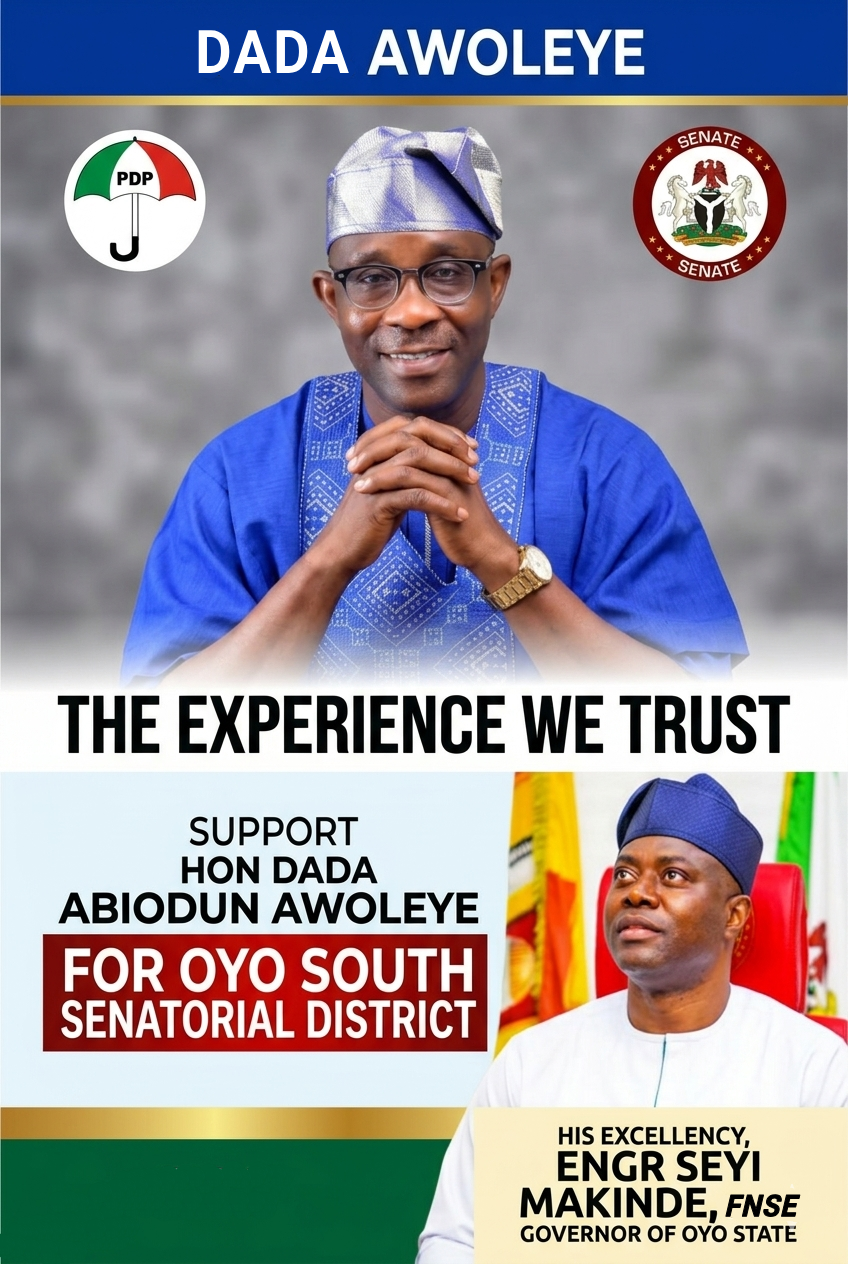
Even beyond the APC, the logic of rotation appears to be gaining wider political acceptance. The Peoples Democratic Party (PDP), despite not being the ruling party in the constituency, has also aligned with this unwritten understanding by picking its prospective candidate for the 2027 election from Akinyele Local Government, Toheeb Adegoke. This move subtly reinforces the argument that rotation is not merely a partisan convenience but a shared expectation around fairness, inclusion, and balanced representation within the constituency.
However, beyond the logic of rotation lies an even more strategic consideration, demography and electoral weight. Akinyele Local Government, with an estimated population exceeding 300,000, holds a clear numerical advantage over Lagelu, which is estimated at about 210,000 residents. In electoral terms, this is not a minor detail. It speaks directly to voting strength, mobilisation capacity, and ultimately, political leverage.
When a demographically dominant bloc begins to feel excluded, the consequences are rarely subtle. Political dissatisfaction often translates into low turnout, protest voting, or quiet resistance within party ranks. For the APC, ignoring this reality could mean alienating a critical support base in Akinyele, one that has historically contributed significantly to the party’s electoral victories in the constituency.
However, zoning and numbers alone do not settle the debate. Performance remains the most potent variable in determining political continuity.
Representation is not ceremonial; it is measurable. While Hon. Olafisoye has been credited in “some quarters” with empowerment initiatives, including the distribution of relief materials, constituency engagement programmes, and the appointment of legislative aides to support his office, the wider question persists, do these efforts translate into impactful federal representation?
Beyond constituency-level interventions, the expectations of a federal lawmaker extend to facilitating access to federal government opportunities. This includes securing job placements in ministries, departments, and agencies, attracting federal projects, and ensuring that constituents benefit directly from national programmes. On this front, the conversation becomes more critical, how many sustainable federal employment opportunities have been facilitated? How visible is the constituency within the framework of federal appointments and interventions?
Equally important is legislative output. How many bills or motions addressing the specific needs of Akinyele/Lagelu have been sponsored or supported? What is the level of contribution at plenary sessions? How effectively has the office influenced policy conversations that impact the constituency? These are not abstract metrics, they are the core indicators of effective representation.
Historical precedent within the constituency highlights this expectation. During his tenure, Olatoye “Sugar” maintained a strong grassroots connection, reportedly appointing numerous legislative aides and building a network that kept the constituency actively engaged in governance. That model reflected a deliberate effort to integrate representation with visibility and access.
The implication is clear, in Akinyele/Lagelu, representation has always been tied to tangible impact. And in politics, perception often defines reality. Where there is a growing perception of limited legislative influence or insufficient federal presence, the argument for continuity becomes increasingly difficult to sustain. This is why the emerging conversation is evolving beyond zoning into a graping question of candidate viability. Within Akinyele, a number of political figures are already being positioned as potential contenders, individuals with varying degrees of grassroots appeal, political structure, and experience. Names such as Murphy Adigun, Hon. Bolaji Badmos, and Olumide Ali continue to surface in conversations around the constituency, reflecting a broader search for recalibration within the party.
For the APC, the decision ahead is both strategic and consequential. Will it adhere to the rotational understanding that has preserved internal harmony? Will it prioritise performance, visibility, and federal relevance in selecting its next candidate? Or will it risk internal fractures by overlooking both zoning expectations and emerging grassroots sentiment?
Because in a constituency where rotation has become more than a tradition, where it has evolved into an expectation any attempt to disrupt that pattern may be interpreted not just as a political miscalculation, but as a direct provocation.
Finally, while we wait for 2027, the APC may come to realise that the real challenge is not the opposition across the aisle, but the consequences of ignoring its own established order.
Tunde Akinwande is a political analyst. He writes from Orogun, Ibadan, the Oyo state capital.


